








If you’ve recently bought an electric vehicle, one of the first questions that comes up is how to charge it at home and whether you can fit the charger yourself. We get asked this a lot by homeowners looking for an EV Charger installer in Brighton and wondering if it’s a job they can take on over a weekend.
On the face of it, a home EV charger might look like a straightforward bit of kit. It’s just a box on the wall, right? In reality, there’s more going on behind that neat casing than most people realise. In this guide, we’ll walk you through what’s legal, what’s safe and what’s sensible when it comes to installing an EV charger in the UK.
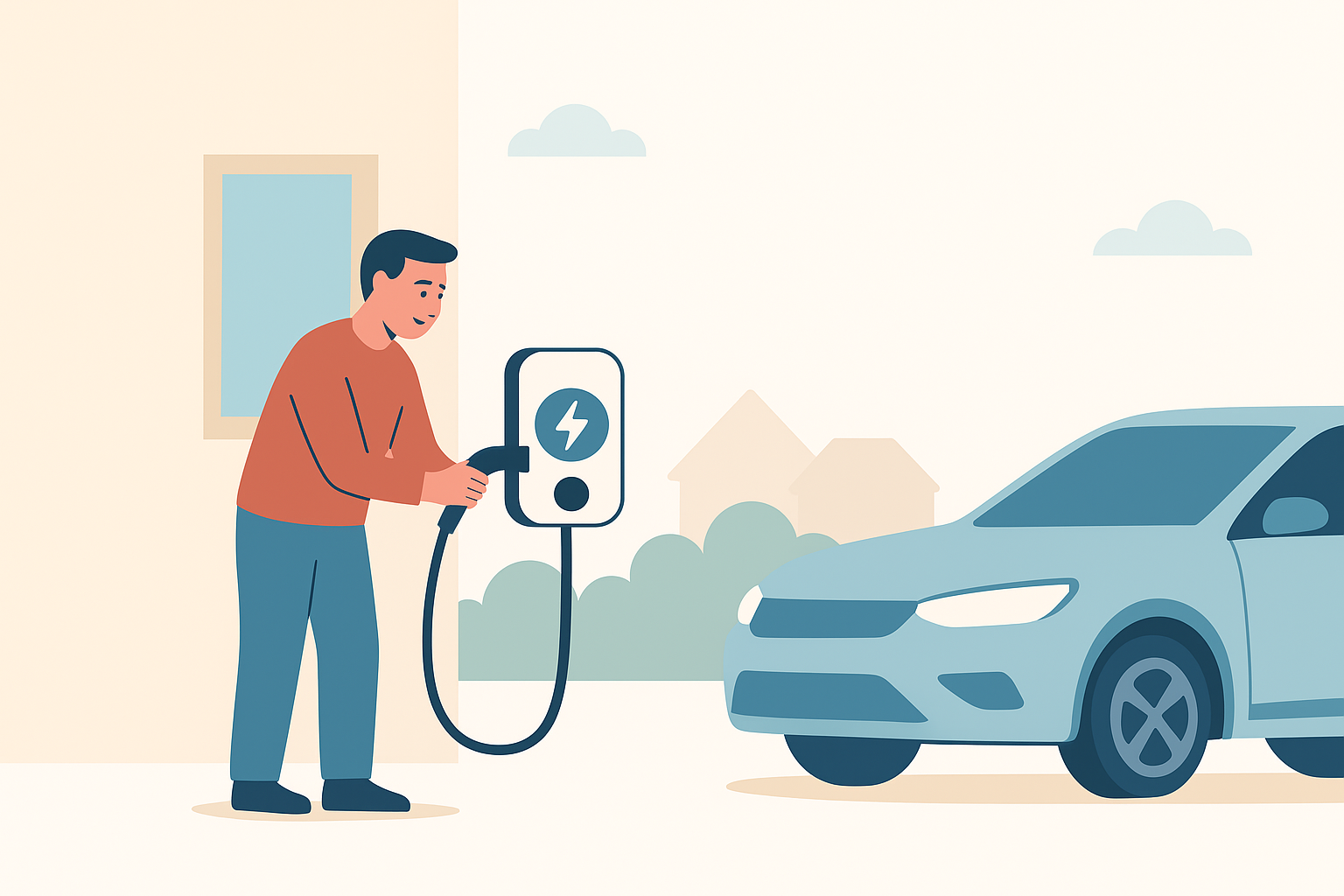
Can You Legally Install an EV Charger Yourself in the UK?
Technically, parts of the installation process fall under notifiable work under Part P of the Building Regulations. That means if you carry out the work yourself, it must comply with UK wiring regulations and be properly certified.
An EV charger isn’t like swapping a light fitting. It usually requires installing a new dedicated circuit from your consumer unit and in many cases, upgrading protective devices. That work must be tested and signed off. If it isn’t, you could run into problems when selling your house or making an insurance claim.
In practical terms, most homeowners are not legally permitted to carry out and certify this type of work unless they are qualified electricians registered with a competent persons scheme. We occasionally get calls from people in Hove or Worthing who’ve started the job themselves and then discovered they need certification to make it compliant.
There’s also the issue of notifying the Distribution Network Operator in some cases, especially if your supply needs checking for load capacity. It’s not just a case of drilling a few holes and connecting a couple of cables.
Safety Risks and Electrical Requirements Explained
Home EV chargers draw a significant amount of power for a sustained period. A standard 7kW charger can be pulling 32 amps continuously for several hours. Your existing electrical system has to be able to handle that safely.
Common safety considerations include:
- Ensuring your consumer unit has capacity for a new circuit
- Using the correct type of RCD or RCBO protection
- Installing suitable earthing arrangements, particularly with PME supplies
- Making sure the cable size and route are appropriate for the load
- Correctly weatherproofing external installations
We’ve seen older properties around Haywards Heath with consumer units that simply aren’t up to modern loads. In those cases, fitting an EV charger safely may mean upgrading the board first. Skipping that step to save money is not worth the risk.
There’s also the very real risk of overheating cables, nuisance tripping, or in worst cases electrical fire if the installation isn’t done properly. EV chargers include built-in safety features, but they only work correctly when installed in line with regulations.
Benefits of Hiring a Professional EV Charger Installer
Bringing in a qualified installer gives you peace of mind that everything has been assessed properly from the start. A good installer won’t just fit the unit where it looks neat. They’ll consider cable routes, load balancing and future proofing.
There are a few clear advantages:
- Full certification and compliance with UK regulations
- Correct notification to relevant authorities where required
- Advice on charger type and smart features
- Safe integration with your existing electrical system
- Warranty protection for both equipment and workmanship
For example, in coastal areas like Worthing, we often recommend specific fixings and additional corrosion protection because of salt in the air. It’s a small detail, but it makes a difference over time.
If you’re based locally, you can also look at our electrical services in Hove, Haywards Heath or Worthing to see how installations are handled in different property types across the area.
Costs Involved in EV Charger Installation
One reason some homeowners consider doing it themselves is to save money. It’s understandable. However, the potential savings are usually smaller than expected once you factor in tools, materials, certification and the risk of having to re-do work.
Installation costs depend on factors such as:
- Distance from the consumer unit to the charger location
- Whether the consumer unit needs upgrading
- Type and brand of charger selected
- Ease of cable routing, especially in older properties
A straightforward installation in a modern home with a garage next to the consumer unit is very different from a Victorian terrace with limited access and a long cable run under floorboards. An experienced installer will talk you through these variables before giving a clear quote.
Choosing the Right EV Charger for Your Property
Not all EV chargers are the same. Beyond the standard 7kW units most homes use, there are smart chargers that integrate with off peak tariffs, solar panels and battery storage.
When advising homeowners, we usually ask a few practical questions:
- Do you have off street parking directly outside the property?
- Are you planning to add solar panels?
- Do you want app control and usage tracking?
- Is this your first EV or are you likely to add another later?
Getting the right charger from the start can save you having to upgrade again in a couple of years. It’s also worth thinking about where the cable will sit when not in use. In tighter driveways around Brighton and Hove, positioning can make daily charging much more convenient.
The Safest Way to Install Your EV Charger
So can you install an EV charger yourself? For most homeowners, the honest answer is no, not legally and not safely without professional qualifications. Even if you have some electrical experience, the certification and compliance side alone usually makes it impractical.
A properly installed charger gives you reliable overnight charging, protects your home’s electrical system and keeps your insurance valid. It also means you won’t be second guessing the wiring every time you plug in.
If you’re considering a home charging point, Brighton Plumbers can assess your property and guide you through the safest and most cost effective options. Contact us today to arrange your EV charger installation or get in touch for a free quote from a qualified installer.