








If you’re looking into hot water cylinder installation, you’ve probably come across the term “unvented system” and wondered what the real difference is. I’ve fitted plenty over the years across Brighton and the surrounding areas and the change they make to everyday life can be surprisingly noticeable.
An unvented hot water cylinder works directly from the mains water supply. That means it delivers hot water at mains pressure rather than relying on gravity from a cold water tank in the loft. In practical terms, that’s stronger showers, better flow at taps and no cold water storage tank taking up space upstairs.
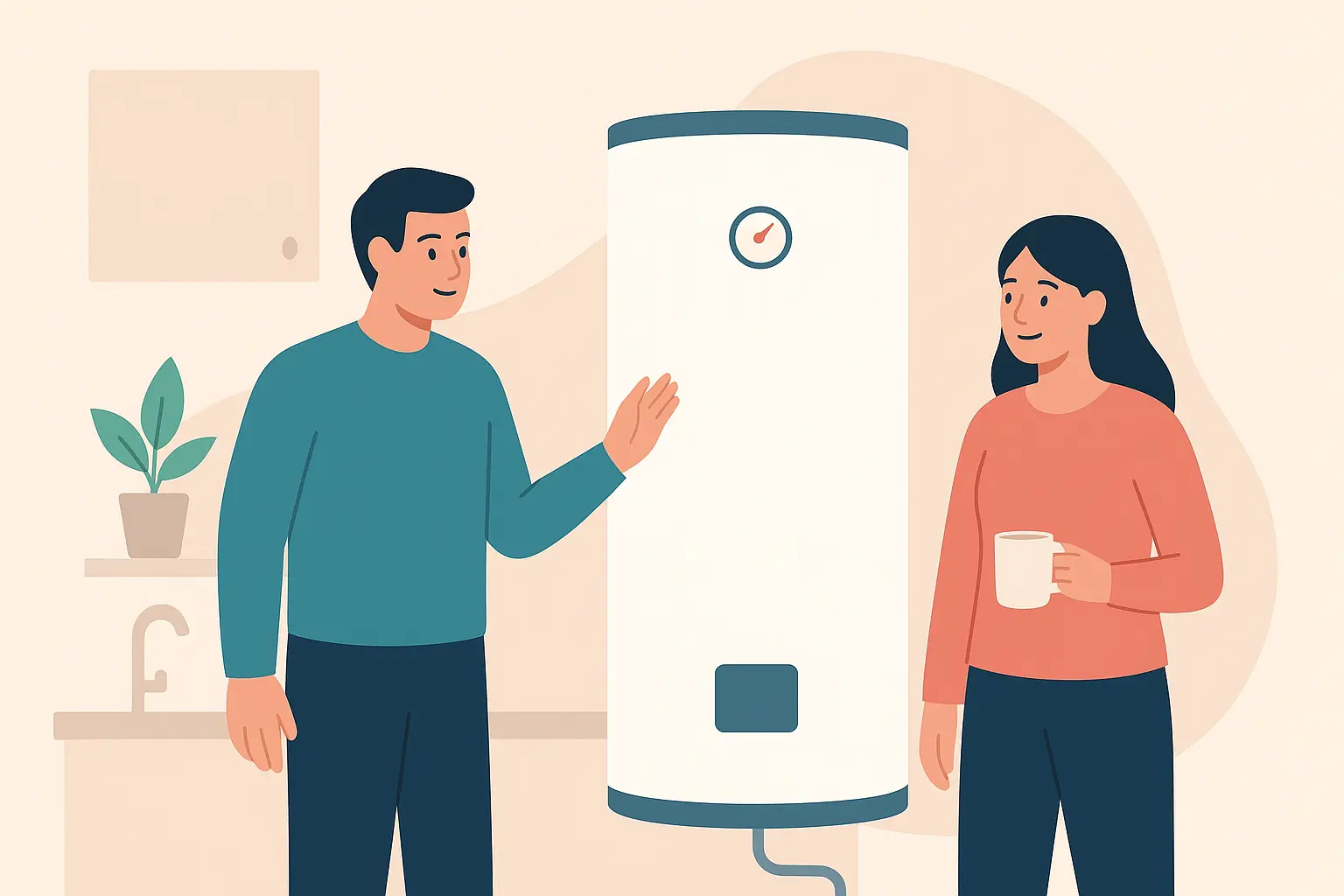
What is an unvented hot water cylinder?
An unvented cylinder is a sealed unit that stores hot water under pressure. It heats water either via a boiler, an immersion heater or occasionally through renewable systems, then keeps it ready for when you turn on the tap.
Traditional vented systems use a cold water tank in the loft to feed the cylinder. The pressure you get depends on the height between the tank and your taps. In lots of older properties around Brighton and Hove, that setup can lead to fairly weak showers, especially on upper floors.
With an unvented system, you remove that loft tank and rely on mains pressure instead. As long as your incoming supply is decent, the difference is immediate.
Key benefits of an unvented system
1. Proper mains water pressure
This is the big one. Most homeowners switch because they’re fed up with dribbly showers or the hot tap running slower than the cold.
An unvented cylinder delivers hot water at the same pressure as your cold mains. That means:
- Strong, consistent showers without needing a pump
- Multiple taps running at once with less drop in flow
- Better performance for rainfall shower heads
I’ve had customers in Worthing say it feels like they’ve moved into a new house after the change. If you’ve ever tried to shower while someone runs a bath on a vented system, you’ll know why.
2. More usable space
Because there’s no need for a cold water storage tank in the loft, you free up that area completely. In houses where the loft is being boarded for storage or converted, this is a real advantage.
In smaller terraces around Worthing, that extra bit of loft room can make a big difference. It also removes the worry about old tanks cracking, lids going missing or insulation soaking up water.
3. Good for modern bathrooms
If you’re installing a new bathroom suite, especially with a large bath or a double shower, an unvented system tends to cope better.
Modern fittings are designed with mains pressure in mind. On a gravity fed setup they can underperform. An unvented cylinder brings everything up to the level most manufacturers expect.
4. Energy efficiency and heat retention
Modern unvented cylinders are very well insulated. When you run your hand over one that’s working properly, you shouldn’t feel much heat loss at all.
Compared with older vented cylinders, particularly those wrapped in a loose jacket, the heat retention is far better. That means less reheating and more efficient use of your boiler or immersion heater.
5. Reliable hot water supply
Because the system is sealed and fed directly from the mains, there’s less risk of contamination from an old loft tank. You also avoid issues like air getting into the system if the storage tank runs low.
For households with teens who all shower in the morning, having a properly sized unvented cylinder can make life a lot smoother.
How it compares to a traditional vented system
That’s not to say vented systems are wrong. They’ve served UK homes well for decades and in some properties they’re still perfectly suitable.
Here’s how they generally stack up:
- Pressure: Vented relies on gravity, unvented uses mains pressure
- Loft tank: Required for vented, not needed for unvented
- Installation complexity: Unvented is more specialised
- Performance with multiple outlets: Usually stronger with unvented
The main limitation with unvented systems is that they depend on your incoming mains pressure and flow rate. Before recommending one, I always test the supply. Some older properties can need upgrades to pipework or valves to get the best results.
Installation considerations and why professional setup matters
Unvented cylinders are not a DIY job. By law in the UK, they must be installed by someone with the correct G3 qualification. That’s because the system stores hot water under pressure and includes safety devices to control temperature and release excess pressure if needed.
When I install one, I’m checking:
- Mains pressure and flow rate
- Correct pipe sizing
- Discharge pipe routing for safety valves
- Compatibility with the existing boiler
The discharge pipework in particular needs careful planning. In tight Brighton terraces or flats in Hove, finding the right compliant route can take a bit of thought. It must terminate safely outside and meet building regulations.
There’s also ongoing maintenance. An annual service helps keep the pressure relief valve and expansion vessel in good working order. It’s not complicated but it is important.
Is an unvented system right for your home?
If your showers are weak, your loft tank is ageing or you’re planning a bathroom upgrade, it’s well worth considering.
For most households with decent mains pressure, an unvented cylinder offers better performance, tidier pipework and improved comfort day to day. The key is correct sizing and competent installation.
If you’re unsure, get your current system checked and your incoming supply tested before committing. A good engineer will give you honest advice rather than pushing you towards a change that doesn’t suit the property.
If you’re based locally and want straightforward guidance, Brighton Plumbers can assess your setup and talk you through the options.
A well installed unvented hot water cylinder isn’t just about better showers. It’s about making the whole house work more smoothly, day in and day out.