








A reliable and efficient boiler is essential for keeping your home warm and providing hot water throughout the year. However, boilers do not last forever. If your existing system is becoming unreliable, expensive to run or increasingly difficult to repair, installing a new boiler could be the most practical long-term solution.
Choosing the right boiler is about more than simply replacing your existing unit with a newer model. The size of your property, number of bathrooms, hot-water demand and condition of your central heating system must all be considered.
In this guide, we explain what to consider when arranging a new boiler installation in Brighton and how a modern heating system could benefit your home.
How Do You Know When Your Boiler Needs Replacing?
An occasional boiler fault does not necessarily mean that you need a completely new system. In many cases, a qualified engineer can repair the problem and restore the boiler to safe working order.
However, replacement may be worth considering if:
- Your boiler is more than 10 to 15 years old
- Your heating bills have noticeably increased
- The boiler frequently loses pressure
- Repairs are becoming more regular or expensive
- Replacement components are difficult to obtain
- Your radiators take a long time to warm up
- Your hot water temperature is inconsistent
- The boiler makes unusual noises
- Your current system no longer meets your household’s needs
A professional assessment can help determine whether repairing or replacing the boiler offers better value.
What Are the Benefits of Installing a New Boiler?
Modern boilers are designed to provide reliable heating and hot water while using energy more efficiently. The precise benefits will depend on the age and condition of the system being replaced, but a new boiler may provide:
Improved energy efficiency
Older boilers can lose efficiency as they age. A modern boiler could use less energy to heat your home, potentially helping you reduce your gas consumption and heating costs.
More reliable heating
Repeated breakdowns can be inconvenient and costly, particularly during the colder months. A professionally installed new boiler should provide more dependable heating and hot water.
Better temperature control
A new heating system can be combined with modern controls, programmable thermostats and smart technology, giving you greater control over when and how your home is heated.
Quieter operation
Older boilers can become increasingly noisy due to worn components, limescale or debris within the system. Newer boilers generally operate much more quietly.
A system suited to your household
If your property has been extended or the number of people living there has changed, your current boiler may no longer be suitable. A new system can be selected around your present heating and hot-water requirements.
Which Type of Boiler Is Right for Your Home?
There is no single boiler suitable for every property. Your installer should assess your home before recommending a particular type and output.
Combi boilers
Combination boilers provide heating and hot water directly from one compact unit. They do not normally require a separate hot-water cylinder, making them a popular choice for flats and smaller homes where space is limited.
However, a combi boiler may not always be suitable for a larger property with several bathrooms and high simultaneous hot-water demand.
System boilers
A system boiler works with a separate hot-water cylinder. It can supply hot water to multiple outlets more effectively than many combi boilers, making it suitable for larger households and properties with more than one bathroom.
Conventional boilers
Also known as regular or heat-only boilers, conventional boilers normally work with a hot-water cylinder and a separate cold-water storage tank. They can be a suitable replacement in properties that already have a traditional heating system.
The best choice will depend on your water pressure, available space, number of bathrooms and typical hot-water usage.
What Happens During a Boiler Installation?
The process should begin with a survey of your property and existing heating system. This allows the engineer to understand your requirements and recommend an appropriately sized boiler.
A typical installation may include:
- Inspecting the existing boiler and central heating system
- Discussing your heating and hot-water requirements
- Recommending a suitable boiler type, model and output
- Providing a clear quotation for the proposed work
- Removing and responsibly disposing of the old boiler
- Installing the new boiler and necessary controls
- Testing the boiler and complete heating system
- Explaining how to operate the new system
- Registering the installation and applicable manufacturer’s warranty
The amount of time required will depend on the complexity of the job. A straightforward boiler replacement may be completed more quickly than changing the type or location of the boiler.
Should the Heating System Be Cleaned?
Sludge, rust and other debris can collect inside radiators and pipework over time. Connecting a new boiler to a heavily contaminated system could restrict circulation and place unnecessary strain on its internal components.
Before installation, the engineer should assess the condition of the central heating system. Depending on what they find, they may recommend a system flush or powerflush. A suitable filter may also be installed to help capture debris and protect the new boiler.
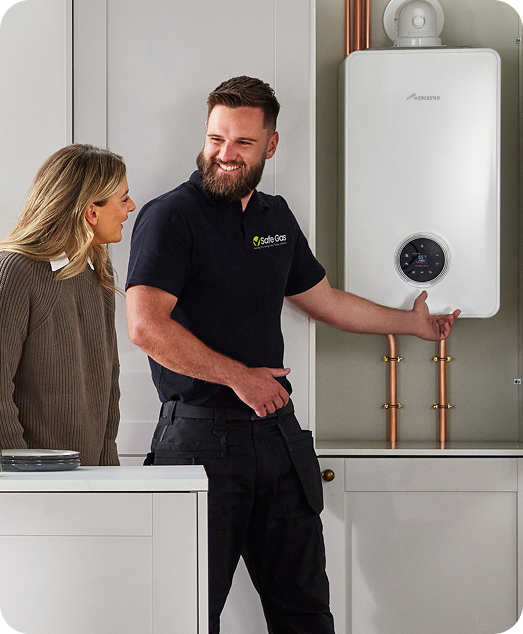
Why Proper Boiler Sizing Matters
Installing the biggest boiler available does not necessarily provide better performance. A boiler that is too powerful for the property may operate inefficiently, while an undersized boiler could struggle to meet the home’s heating and hot-water demands.
An experienced installer will consider factors such as:
- The size and layout of the property
- The number and type of radiators
- The level of insulation
- The number of bathrooms
- The household’s hot-water usage
- Any planned extensions or property improvements
This assessment helps ensure that the selected boiler is suited to the property rather than relying on a one-size-fits-all recommendation.
Always Use a Gas Safe Registered Engineer
Gas boiler work must be carried out by a suitably qualified Gas Safe registered engineer. Professional installation helps ensure that the boiler operates safely, efficiently and in accordance with current regulations.
Once the work is complete, the engineer should test the system thoroughly, explain the controls and provide the relevant documentation.
Looking for Boiler Installations in Brighton?
If your boiler is unreliable, inefficient or no longer suitable for your household, Safe Gas can assess your current heating system and recommend an appropriate replacement.
Our qualified engineers provide professional boiler installations in Brighton, Hove and the surrounding areas. We install combi, system and conventional boilers, with solutions tailored to different properties, heating requirements and budgets.
Contact Safe Gas today to arrange a free site survey and receive a clear, no-obligation quotation for your new boiler installation.