








If you live in Brighton & Hove, you will know how mixed our properties can be. Regency terraces with high ceilings, 1930s semis in Patcham, converted flats near the seafront, new builds popping up around Hove. One thing they all have in common is the need for working smoke alarms. It sounds obvious, but we still get called out to homes where alarms have flat batteries, are covered in dust or have been removed entirely because they kept beeping.
Regular smoke alarm checks are one of the simplest ways to protect your home and the people in it. Yet many homeowners and landlords are unsure how often they should be testing them, what the law says and when an alarm is simply too old to rely on. Let us break it down in plain English.
Legal Requirements for Smoke Alarms
If you are a homeowner, there is currently no specific law telling you exactly how often to test your smoke alarms. That said, you still have a duty of care to your family and anyone visiting your home.
For landlords, it is more clear cut. In England, you must have at least one smoke alarm installed on every storey used as living accommodation. On the first day of a new tenancy, you are legally required to check that each alarm is in working order. Local councils can and do issue fines if this is ignored.
We often get asked whether hard-wired alarms mean you can forget about them. The answer is no. Even mains-powered alarms usually have a backup battery and still need regular testing.
From our experience carrying out smoke alarm checks across Brighton, it is rental flats where we most often find problems. Tenants assume landlords will sort it, landlords assume tenants will mention it and in the meantime the alarm sits there silently not doing its job.
How Often Should You Test Smoke Alarms?
Monthly Testing
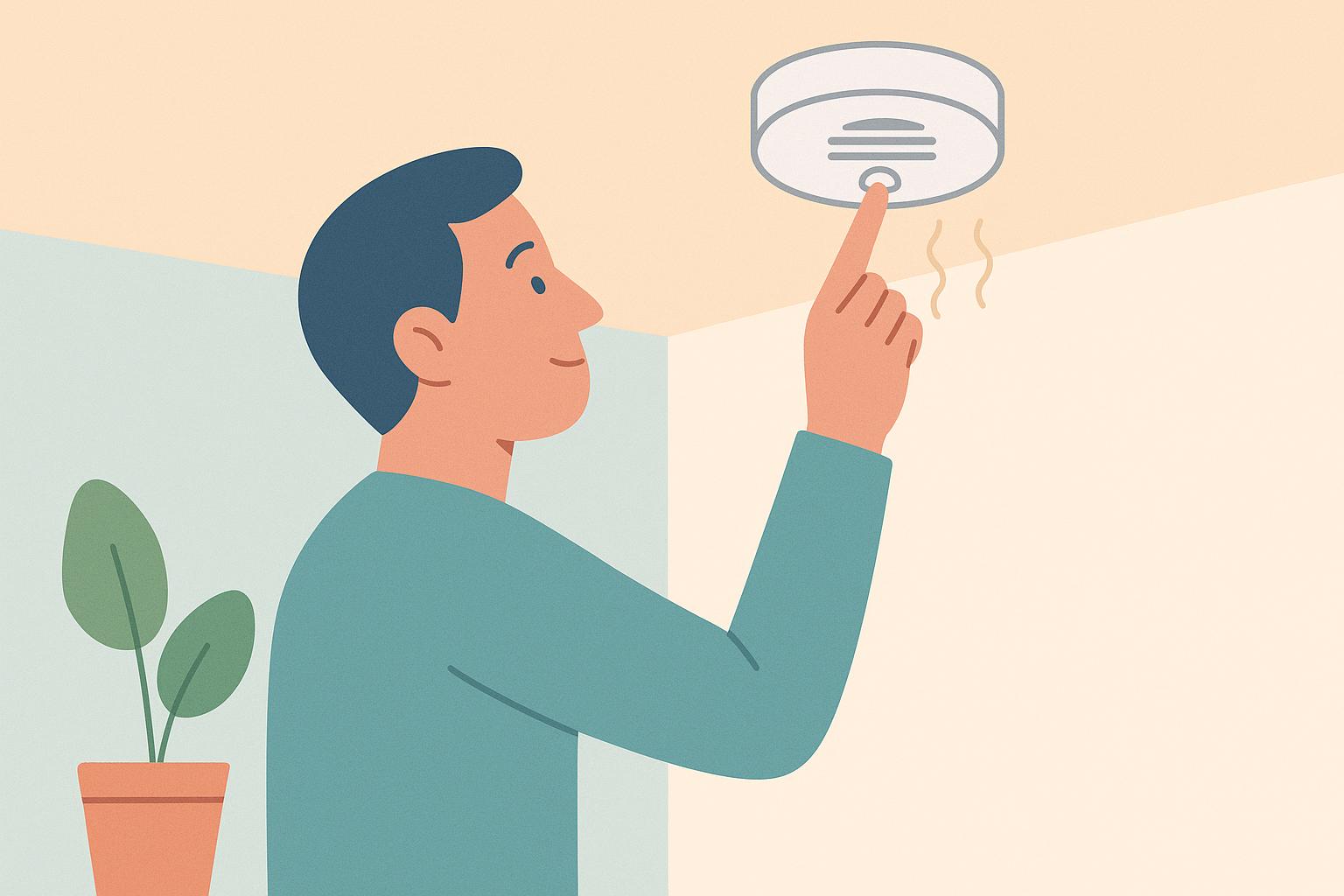
A simple rule we give customers is this: test your smoke alarms once a month. It takes less than a minute. Press and hold the test button until the alarm sounds. If it does not, you have a problem to sort out straight away.
We also advise testing after changing the battery and after any electrical work that might affect the circuit.
After Battery Changes
For battery-only alarms, change the battery at least once a year. Many people do it when the clocks change so they do not forget. If the alarm gives a short chirp every 30 to 60 seconds, that is usually a low battery warning. Do not take the battery out and leave it. We have seen that more times than you would think.
After Building Work or Decorating
If you have had plastering done, sanding or even heavy decorating, test the alarms afterwards. Fine dust can get inside the sensor chamber. In older Brighton properties where ceilings get skimmed regularly, this is a common issue.
When customers search for smoke alarm testing Brighton, it is often after they have had repeated false alarms or complete silence from a unit they are not sure they trust. Regular testing avoids both extremes.
Simple Maintenance Tips
Smoke alarms are low maintenance but not no maintenance. A bit of attention goes a long way.
- Vacuum around the vents every few months to remove dust and cobwebs.
- Wipe the outer casing with a dry cloth.
- Keep alarms free from paint. We have seen plenty that have been painted over during a quick refresh.
- Make sure nothing is blocking them, especially in loft conversions where storage can creep closer over time.
In kitchens, consider heat alarms instead of smoke alarms as they are less likely to trigger when someone burns the toast. In shared HMOs around areas like Elm Grove, this can make a big difference to whether tenants leave alarms in place or disable them out of frustration.
If you are unsure whether you have the right type of alarm in the right location, that is something we check during home visits. Smoke alarm checks are not just about pressing a button. It is about making sure the setup actually makes sense for the layout of your home.
When Should You Replace a Smoke Alarm?
All smoke alarms have a lifespan. Most are designed to last around 10 years. After that, the sensors can become less reliable even if they still beep when tested.
Check the manufacture date on the back of the unit. In some older homes in Hove we still come across alarms installed in the early 2000s. They might look fine from the outside but internally they are well past their best.
You should replace a smoke alarm if:
- It is over 10 years old.
- It fails repeated tests after changing the battery.
- It goes off randomly with no clear cause.
- The casing is damaged or discoloured from heat.
Modern alarms can be interlinked so that when one goes off, they all do. In larger townhouses common across Brighton this can provide crucial extra warning time, especially if bedrooms are on different levels.
Why It Really Matters
We have walked into properties after small kitchen fires where the only reason the damage was limited was because the alarm went off early. We have also seen the other side, where the battery had been removed and no one realised there was a problem until smoke was already filling the hallway.
Smoke alarm checks are not about ticking a box. They are about time. Early warning gives you time to get out, time to call for help and time to prevent a bad situation becoming far worse.
If you are a homeowner wanting reassurance or a landlord needing documented smoke alarm testing in Brighton, it makes sense to have it done properly. At Brighton Plumbers we carry out thorough checks, look at the positioning and make practical recommendations based on the type of property you have. Whether you are in Brighton, Hove, Worthing or Haywards Heath, Brighton Plumbers can help make sure your alarms are doing the job they are there for.
If you would rather have peace of mind than wonder whether that little white disc on the ceiling still works, Brighton Plumbers are here to help. Book a home safety check