








Few things are more frustrating than turning the heating on and finding one radiator stone cold while the rest of the house warms up. I see this all the time, especially in older terraces around Hove and family homes out towards Haywards Heath. The good news is that a radiator not heating up is usually caused by something fairly straightforward.
If you are stuck with no heat at all, you may need emergency heating support in Brighton. But before picking up the phone, there are a few simple checks you can safely do yourself.
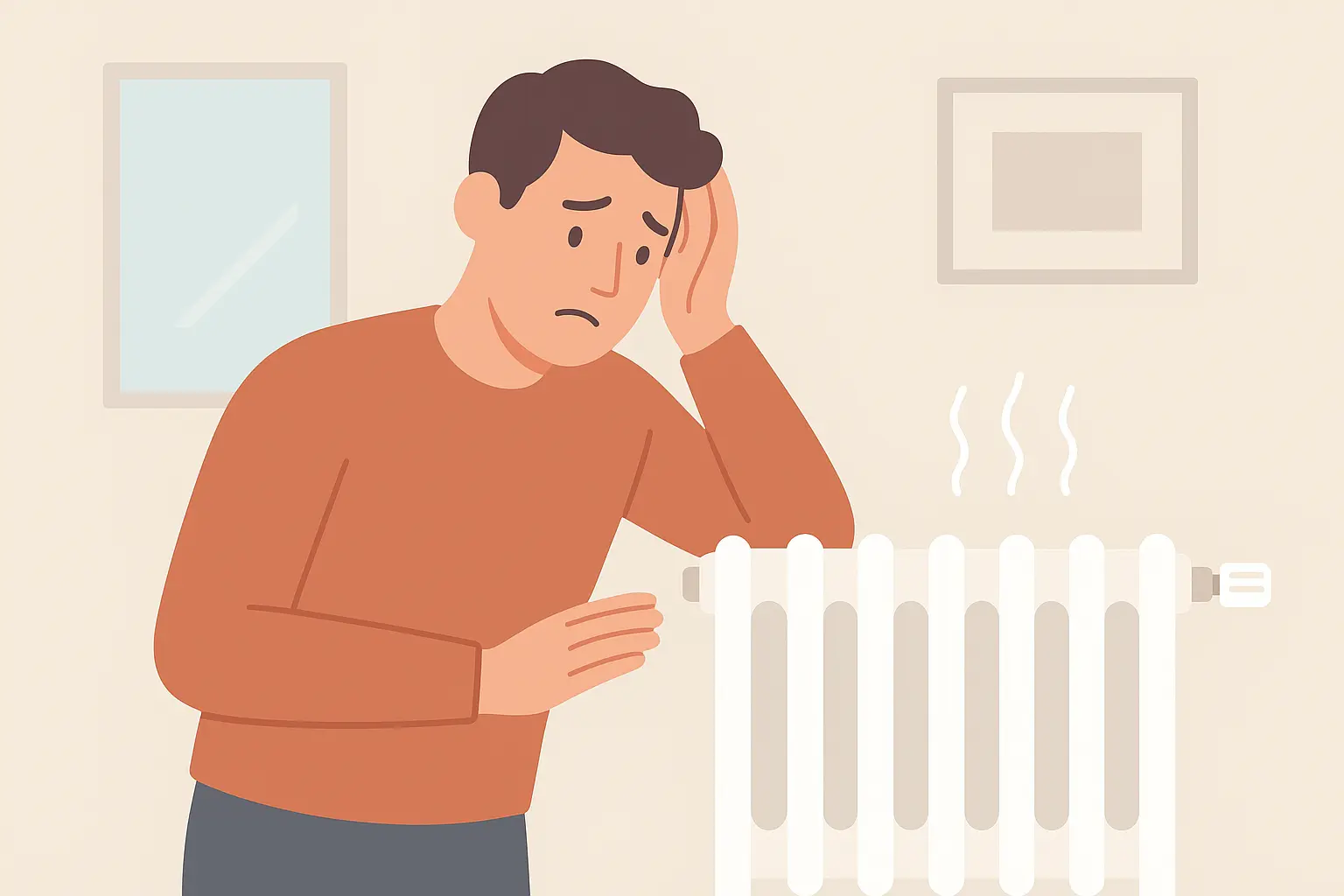
Common causes of a radiator not heating up
Trapped air in the radiator
This is by far the most common issue. If the bottom of the radiator is warm but the top is cold, there is a good chance air is trapped inside. Air rises, so it sits at the top and stops hot water from filling the whole panel.
I often get asked, “Why does it only happen to one radiator?” It is usually just where the air has collected in the system. It does not always affect every radiator at once.
Sludge build-up
If the bottom of the radiator is cold but the top is hot, that is usually sludge. Over time, rust and debris settle at the bottom and restrict water flow. I see this a lot in older systems in Worthing where the heating has not been flushed for years.
Sludge can also make radiators take ages to warm up or leave cold patches across the middle.
Faulty or stuck valves
Sometimes the problem is not inside the radiator at all. The thermostatic radiator valve, usually with numbers on it, can stick in the closed position. This often happens after summer when the heating has been off for months.
The lockshield valve on the other side can also be turned down too far, especially if someone has been fiddling while decorating.
Low boiler pressure
If several radiators are not heating properly, check your boiler pressure gauge. In most UK homes it should sit between 1 and 1.5 bar when the system is cold. If it is much lower, the system may not circulate water effectively.
Step-by-step fixes you can try at home
1. Bleed the radiator
If the top is cold, bleeding is your first job.
- Turn the heating off and let the system cool.
- Use a radiator key and a cloth.
- Slowly open the bleed valve at the top.
- Let the air hiss out until water flows steadily.
- Close the valve firmly but do not overtighten.
After bleeding, check the boiler pressure. You may need to top it up slightly following your boiler manual.
2. Check the thermostatic radiator valve
If the radiator is completely cold, remove the TRV head. Underneath you will see a small metal pin. Gently press it down with your finger or the back of a spoon. It should move up and down freely.
If it is stuck down, a light tap and a bit of patience usually frees it. Do not pull it out with pliers.
3. Make sure both valves are open
Check that the lockshield valve is not fully closed. You can turn it anti-clockwise slightly to see if that improves heat. Just remember its original position in case you need to turn it back.
4. Check and adjust boiler pressure
If the gauge is too low, use the filling loop to bring the pressure back up slowly. If you are unsure how, it is better to get advice than guess. Too much pressure can cause its own problems.
5. Consider a system clean if sludge is suspected
If you have cold spots at the bottom and bleeding does not fix it, sludge is likely. A powerflush or chemical flush carried out properly can make a huge difference. You can read more about how sludge affects performance in articles on heating efficiency and boiler care on the blog.
When to call a professional heating engineer
There is a point where DIY checks stop being sensible.
- If multiple radiators are cold
- If the boiler keeps losing pressure
- If you spot leaks around valves or pipework
- If your boiler is making unusual banging noises
- If bleeding does not solve the issue
Homes in Hove, Haywards Heath and Worthing often have a mix of old and newer heating upgrades, which can make diagnosis a bit trickier. If the system has been added to over the years, balancing issues can also crop up.
I am often called out to jobs where the issue started as a small cold patch and became a full system problem because it was left for months. Heating systems rarely fix themselves.
Preventative maintenance tips to avoid future issues
A bit of simple maintenance goes a long way.
- Bleed radiators once a year before winter
- Keep an eye on boiler pressure every few months
- Use your heating occasionally in summer to stop valves sticking
- Consider inhibitor treatment to reduce sludge build-up
- Book an annual boiler service
Many customers tell me they only think about their heating once it stops working. A quick check in early autumn can save you from waking up to a freezing house in January.
Final thoughts
If your radiator is not heating up, it is often something simple like trapped air or a stuck valve. Take your time, work safely and do one check at a time. If you are unsure, or the problem keeps coming back, it is worth getting it looked at properly.
For homeowners and tenants across the local area, Brighton Plumbers regularly help diagnose stubborn radiator issues and wider heating faults. If you would prefer a qualified engineer to take a look, get in contact with us today.